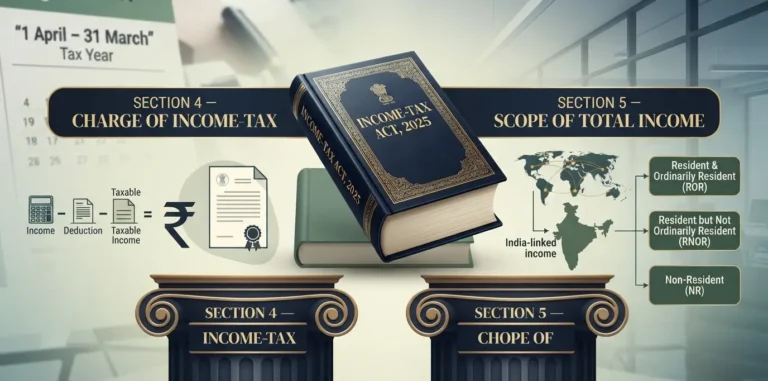

HRA and LTA get all the attention when people compare the two tax regimes. But there are several other salary allowances under Schedule III, and their tax treatment under the new regime is less straightforward.
We covered the two headline salary exemptions, HRA and LTA, in the last article. Both are excluded under the default new tax regime, making them important when choosing between the old and new tax regimes. This article looks at salary allowances and their tax treatment under the new tax regime, including travel, transfer, daily allowance, conveyance, children’s education, hostel and other specified allowances. Section 202(2) of the Income-tax Act, 2025 restricts several Schedule III exemptions under the default new regime, while allowances covered by Sl. Nos. 12 and 13 may qualify where a specific provision allows them. Rule 280 of the Income-tax Rules, 2026 sets out the relevant allowances along with their conditions and limits. The guide below compares the new and old tax regime treatment of salary allowances so you can see which exemptions may apply to your salary.
Applicability note: These allowances continue the earlier Section 10(14) framework under the Income-tax Act, 1961 and are now covered by Section 11 read with Schedule III (Table, Sl. Nos. 12 and 13) of the Income-tax Act, 2025, along with Rule 280 of the Income-tax Rules, 2026. The new rules also revise several prescribed monetary limits and conditions compared with the earlier Rule 2BB framework. Therefore, for tax year 2026-27 onwards, do not rely on the older pre-2026 limits without checking the corresponding provision under Rule 280.

Schedule III Salary Allowances Under Income Tax Act 2025: Two Exemption Types
Schedule III does not treat every salary allowance in the same way. It broadly covers two types of allowance exemptions, and understanding the difference helps avoid confusion about what can actually be claimed.
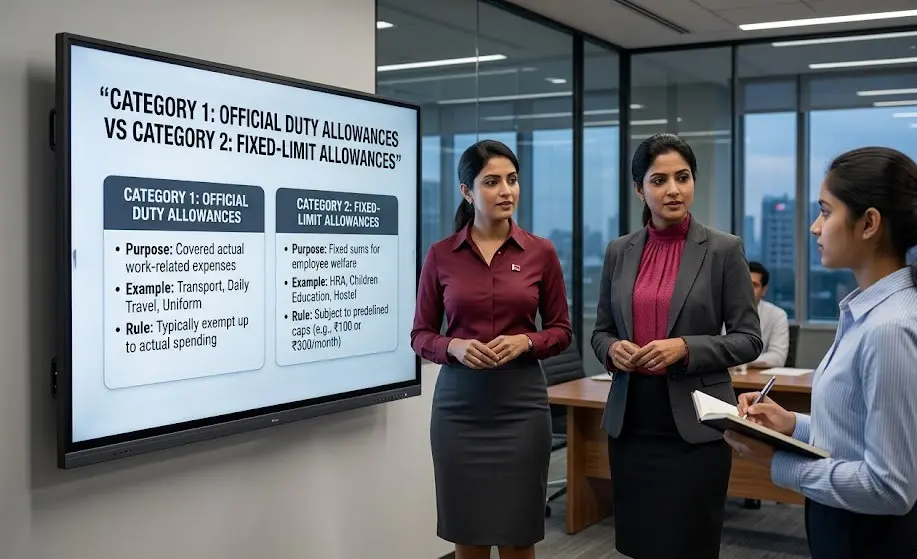
Category 1 — Official Duty
Covers allowances for expenses incurred wholly, necessarily and exclusively in performing official duties, subject to the conditions and limits prescribed under Rule 280.
Category 2 — Fixed Limits
Covers specified allowances where the exemption is subject to a fixed rupee amount or other prescribed limit under Rule 280.
Category 1: Official Duty Allowances Under Rule 280(1)
These allowances are linked to expenses incurred while performing your job rather than to ordinary personal spending. Listed under Schedule III, Table Sl. No. 12 and detailed in Rule 280(1) of the Income-tax Rules, 2026, they cover specific official-duty expenses and are subject to the conditions and limits prescribed for the relevant allowance. Simply calling a payment a “travel,” “conveyance,” “helper,” “research,” or “uniform” allowance does not make it exempt; the payment must fall within the relevant statutory purpose and satisfy the applicable conditions.
- Travelling Allowance — for travel on tour or on transfer.
- Transfer-related expenses — for expenses connected with the transfer, packing and transportation of personal effects.
- Daily Allowance — for daily expenses incurred while away from the normal place of duty during a tour or transfer.
- Conveyance Allowance — for conveyance expenses incurred while performing official duties, where free conveyance is not provided by the employer.
- Helper Allowance — for expenditure incurred on a helper engaged for performing official duties, where the prescribed conditions are satisfied.
- Research and Training Allowance — for academic, research or training pursuits in the circumstances covered by Rule 280.
- Uniform Allowance — for expenditure on the purchase or maintenance of a uniform required for official duties.
One important distinction: official-duty conveyance is not the same as ordinary Transport Allowance paid for commuting between home and the workplace. Ordinary commuting allowance is generally taxable. The specific exemption for transport expenses of eligible differently-abled employees is dealt with separately under Rule 280.
Category 2: Fixed-Limit Allowances Under Rule 280(2)
This category, listed under Schedule III, Table Sl. No. 13 and detailed in Rule 280(2) of the Income-tax Rules, 2026, covers specified allowances with prescribed monetary or percentage-based limits. The exemption is subject to the applicable limit, conditions and eligibility requirements under Rule 280. Where the amount received is lower than the prescribed exemption limit, the exemption cannot exceed the amount actually received. Rule 280 also revises several limits compared with the earlier Rule 2BB framework, so older pre-2026 figures should not be used without checking the corresponding provision under the 2026 Rules.
| Allowance | Exemption Limit |
|---|---|
| Children’s Education Allowance | ₹3,000 per month, per child, up to 2 children |
| Hostel Expenditure Allowance | ₹9,000 per month, per child, up to 2 children |
| Transport Allowance for eligible employees with disabilities | ₹15,000 plus dearness allowance thereon per month in metro cities; ₹8,000 plus dearness allowance thereon per month in other cities |
| Underground Mines Allowance | 15% of Basic Pay |
| Special Compensatory (Remote Locality) Allowance | ₹7,000 (Tough Location I), ₹4,500 (Tough Location II), or ₹1,500 (Tough Location III) per month, depending on the notified area |
| Compensatory Field Area Allowance | ₹13,500 per month |
| Compensatory Modified Field Area Allowance | ₹8,000 per month |
| Allowance for employees of a transport system, for personal expenditure while on duty | 70% of the allowance received, subject to a maximum of ₹25,000 per month, where the conditions under Rule 280 are satisfied |
Two allowances in this table work differently from a simple monthly rupee cap. The Underground Mines Allowance is linked to 15% of Basic Pay, while the Transport System Employee Allowance is exempt at 70% of the amount received, subject to the prescribed ₹25,000 monthly limit. The transport allowance for eligible employees with disabilities also has different limits for metro and other cities and includes a dearness allowance component.
Rule 280(2) also prescribes further allowances linked to specific locations, field postings and duties, including allowances for counter-insurgency operations, high-altitude areas, highly active field areas, island postings and Siachen. The applicable exemption depends on the specific location, duty and conditions prescribed under Rule 280.
| Allowance | Exemption Limit |
|---|---|
| Counter-Insurgency Allowance | ₹22,000 per month |
| High Altitude (Uncongenial Climate) Allowance | ₹4,500 / ₹7,000 / ₹30,000 per month, depending on the specified altitude or location |
| Special Compensatory Highly Active Field Area Allowance | ₹22,000 per month |
| Island (Duty) Allowance | 10%, 16%, or 20% of Basic Pay, depending on the specified location |
| Siachen Allowance | ₹42,500 per month |
Another important point is that some allowances cannot simply be combined with others for the same posting. Rule 280 sets out specific conditions and restrictions for certain combinations, so eligibility should be checked against the relevant allowance rather than assuming that every applicable allowance can be claimed together.
The figures above are based on the Income-tax Rules, 2026. If you come across older articles quoting much lower amounts for allowances such as Children’s Education Allowance or Hostel Expenditure Allowance, check whether they are referring to the earlier Rule 2BB framework rather than the current Rule 280.
This example illustrates how the prescribed Rule 280 limits work, assuming Deepak is eligible for the relevant exemption under the applicable tax regime. Deepak has two children, one in regular school and one staying in a hostel. His salary structure includes ₹8,000 a month as Children’s Education Allowance and ₹20,000 a month as Hostel Expenditure Allowance, ₹28,000 a month in total. Based on the prescribed limits, the maximum exemption would be ₹6,000 a month for education (₹3,000 × 2 children) and ₹18,000 a month for hostel expenses (₹9,000 × 2 children), giving a combined limit of ₹24,000 a month. If the exemption is otherwise available, the excess ₹4,000 a month would remain taxable, or ₹48,000 for the year.

Salary Allowances Exempt Under the New Tax Regime
Not all salary allowances are tax-exempt under the new tax regime. Section 202(2) of the Income-tax Act, 2025 specifically restricts exemptions under Schedule III. Allowances covered by Sl. Nos. 5, 6, 7, 8, 11 and 17 are not available under the default new regime, while allowances covered by Sl. Nos. 12 and 13 are also excluded unless a specific provision allows the exemption.
Rule 280 of the Income-tax Rules, 2026 prescribes various salary allowances along with the conditions and limits applicable to them. The table below compares the practical tax treatment of common salary allowances under the new and old tax regimes, including travel, transfer, daily allowance, conveyance, children’s education allowance, hostel allowance, HRA and LTA.
| Allowance | New Regime | Old Regime |
|---|---|---|
| Travel on tour / transfer | ✅ Generally treated as exempt | ✅ Exempt |
| Transfer-related expenses | ✅ Generally treated as exempt | ✅ Exempt |
| Daily allowance during tour / transfer | ✅ Generally treated as exempt | ✅ Exempt |
| Official-duty conveyance | ✅ Generally treated as exempt | ✅ Exempt |
| Helper allowance | ❌ Not allowed | ✅ Exempt |
| Academic / research / training | ❌ Not allowed | ✅ Exempt |
| Uniform allowance | ❌ Not allowed | ✅ Exempt |
| Transport-system employee allowance | ❌ Not allowed | ✅ Exempt |
| Children’s Education Allowance | ❌ Not allowed | ✅ Exempt |
| Hostel Expenditure Allowance | ❌ Not allowed | ✅ Exempt |
| Remote locality / field-area allowances | ❌ Not allowed | ✅ Exempt |
| Counter-insurgency allowance | ❌ Not allowed | ✅ Exempt |
| Disabled-employee transport | ✅ Generally treated as exempt | ✅ Exempt |
| High-altitude allowance | ❌ Not allowed | ✅ Exempt |
| Underground allowance | ❌ Not allowed | ✅ Exempt |
| Highly active field area | ❌ Not allowed | ✅ Exempt |
| Island duty allowance | ❌ Not allowed | ✅ Exempt |
| Siachen allowance | ❌ Not allowed | ✅ Exempt |
| HRA | ❌ Not allowed | ✅ Exempt |
| LTA | ❌ Not allowed | ✅ Exempt |
| Government employees’ allowances/perquisites for services outside India | ✅ Exempt | ✅ Exempt |
Under the new tax regime, allowances covered by Schedule III Sl. Nos. 12 and 13 should not be assumed to be tax-free simply because they are listed under Rule 280. Section 202(2)(a)(ii) restricts these exemptions unless a specific provision allows the exemption. The treatment of some Rule 280 allowances under the new regime is not expressly clear from the interaction of Section 202 and Rule 280. Therefore, the applicable provision and conditions should be checked before claiming an exemption.
Under the old tax regime, the prescribed Rule 280 allowances are generally considered for exemption subject to the applicable conditions and limits. However, Rule 280(3) contains wording that creates uncertainty because it specifically refers to an employee exercising the option under Section 202(4) and then lists travel, transfer, daily and official-duty conveyance allowances, along with disabled-employee transport. This wording does not sit neatly with the broader old-regime treatment reflected in the overall framework. Accordingly, the exemption for any specific allowance should be checked against the applicable provision and the conditions prescribed under Rule 280.
The treatment of these allowances follows the provisions of Section 202 of the Income-tax Act, 2025 and Rule 280 of the Income-tax Rules, 2026. Section 202(2)(a)(ii) provides an exception for allowances under Schedule III Sl. Nos. 12 and 13 where a specific provision allows the exemption. Rule 280 prescribes various allowances under these provisions, while Rule 280(3) specifically refers to travel, transfer, daily and official-duty conveyance allowances under Rule 280(1)(a) to (d), and disabled-employee transport under Rule 280(2), Table Sl. No. 10, for an employee exercising the option under Section 202(4). The wording of Rule 280(3) creates some uncertainty when read with the overall new- and old-regime framework. Therefore, the exemption for any specific allowance should be determined with reference to the applicable provision, conditions and limits under Rule 280. Where the statutory position is unclear, professional tax advice may be appropriate.
- Confusing Conveyance Allowance with Transport Allowance — official-duty conveyance is different from transport allowance for ordinary commuting. The latter is generally taxable, except for the specific exemption available to eligible differently-abled employees subject to the prescribed limit.
- Assuming any allowance in this article is automatically exempt under the new regime — it is not. Section 202(2)(a)(ii) excludes exemptions under Schedule III Sl. Nos. 12 and 13 from the default new-regime computation unless a specific prescription applies. No separate prescription has been identified for the allowances discussed here. Therefore, taxpayers should not assume a new-regime exemption merely because an allowance is listed under Rule 280.
- Assuming an allowance’s name decides its tax treatment — the name of an allowance does not determine its tax treatment. Exemption depends on whether the allowance falls within the relevant provision of Schedule III and satisfies the applicable conditions and limits under Rule 280, not on what your employer’s payroll system calls it.
- Assuming Children’s Education Allowance is automatically exempt — where the exemption is available, it is subject to the employee-specific conditions and prescribed limits under Rule 280, including the maximum number of eligible children. Do not assume that the entire amount received is automatically exempt.
Frequently Asked Questions
Are salary allowances under Schedule III available in the new tax regime?
Generally, not by default. Section 202(2) excludes exemptions under Schedule III Sl. Nos. 12 and 13 from the new-regime computation, except for allowances specifically provided for this purpose. This is different from HRA and LTA, which are expressly excluded under Section 202(2)(a)(i). Rule 280 prescribes various allowances under Sl. Nos. 12 and 13, while Rule 280(3) specifically refers to travel, transfer, daily and official-duty conveyance allowances, along with disabled-employee transport. The wording of Rule 280(3) creates some uncertainty about how these allowances apply under the new regime. Therefore, the exemption should be checked against the specific provision applicable to the allowance.
What is the exemption limit for Children’s Education Allowance?
₹3,000 per month per child, for a maximum of two children, as prescribed under Rule 280(2) of the Income-tax Rules, 2026. This allowance doesn’t clearly survive under either regime on the confirmed text: under the old regime, it’s excluded per Rule 280(3), since it isn’t among the four items that provision names as surviving; under the default new regime, it’s excluded by Section 202(2)’s own wording unless specifically prescribed back in, and no such prescription has been identified. Any amount received above the prescribed limit is taxable, and the exemption is subject to the employee-specific conditions and the maximum number of eligible children prescribed under Rule 280.
What’s the difference between Conveyance Allowance and Transport Allowance?
Conveyance Allowance covers travel expenses for performing official duties, such as client visits, and is exempt to the extent of eligible expenditure actually incurred, subject to the conditions prescribed under Rule 280, rather than a fixed rupee cap. Transport Allowance historically covered the ordinary home-to-office commute; that general exemption was withdrawn when the standard deduction was introduced, and now survives only for differently-abled employees, exempt up to ₹15,000 plus dearness allowance thereon per month in metro cities or ₹8,000 plus dearness allowance thereon per month in other cities.
Do I need bills to claim Conveyance or Travel Allowance exemption?
Where the exemption depends on expenditure actually incurred, as with Category 1 allowances, you should maintain appropriate supporting records, since the exempt amount must correspond to genuine spending. That said, an allowance doesn’t automatically become fully taxable simply because your employer doesn’t collect a specific bill at the point of payment; documentary requirements can vary depending on the nature of the allowance and your employer’s own tax-compliance process. It’s still good practice to keep your own records regardless of what your employer formally asks for.
Is Hostel Expenditure Allowance separate from Children’s Education Allowance?
Yes. They are separate allowances with separate prescribed limits under Rule 280(2), ₹3,000 per month per child for education and ₹9,000 per month per child for hostel expenditure, both capped at two children. Where an employee is eligible for both and both are separately granted, the respective limits may apply, subject to the conditions of Rule 280.
Are there tax exemptions for allowances paid for hilly, border, or remote-area postings?
Yes. Special Compensatory (Remote Locality) Allowances for hilly, high-altitude, border, or other notified difficult areas are exempt up to ₹7,000, ₹4,500, or ₹1,500 a month depending on the specific tough-location category, under Rule 280(2). Compensatory Field Area and Modified Field Area Allowances go further, up to ₹13,500 and ₹8,000 a month respectively, for specified postings. Some of these allowances cannot be claimed together with certain other overlapping area-based allowances for the same posting; the exact combinations are set out in Rule 280 itself.
What is Rule 280 of the Income-tax Rules, 2026?
Rule 280 prescribes the allowances covered under Schedule III, Table Sl. No. 12 and 13, of the Income Tax Act, 2025. Sl. No. 12 covers official-duty allowances exempt to actual expenditure, such as travel, daily, conveyance, helper, research, and uniform allowances. Sl. No. 13 covers fixed-limit allowances, such as Children’s Education, Hostel Expenditure, and area-based hardship allowances, each with its own prescribed monthly cap.
Does exercising the option under Section 202(4) change which allowances I can claim?
Yes. Section 202(4) is the option to move from the default new tax regime to the old tax regime.Under the old tax regime, the exemptions available under Rule 280 are broader and cover several prescribed allowances, including children’s education, hostel expenditure, field-area, high-altitude, uniform and other specified allowances, subject to the applicable conditions and limits.Under the new tax regime, these exemptions are generally not available unless a specific provision allows the particular allowance.Important: Rule 280(3) contains wording that creates some uncertainty because it specifically refers to an employee exercising the option under Section 202(4) and then mentions a narrower set of allowances. Therefore, the wording of Rule 280(3) should be read together with Section 202 when determining the treatment of these allowances.
Income From Salaries — Series Index
Heads of Income & Chargeability of Salary (§13, §15)
The five-head framework, and exactly when salary becomes taxable.
Part 2HRA & LTA: The Two Big Salary Exemptions
The formulas, the conditions, and the one rule that overrides both.
Other Salary Allowances: What’s Taxable, What’s Not
Official-duty allowances, fixed-limit allowances, and which survive the new regime.
Perquisites, Part 1: Accommodation & Conveyance
Rent-free accommodation valuation and company car perquisite rules.
The key point to remember is simple: HRA and LTA are expressly excluded from the default new tax regime and remain available only under the old regime, subject to the applicable conditions. Other salary allowances covered by Schedule III need to be checked against Section 202 of the Income-tax Act, 2025 and Rule 280 of the Income-tax Rules, 2026. The new regime restricts several Schedule III exemptions, while specific allowances may qualify where the law provides for the exemption. Rule 280 also sets out the applicable conditions and limits. Because the wording of Rule 280(3) creates some uncertainty when read with the overall new- and old-regime framework, do not assume that an allowance is exempt simply because it appears in Rule 280. Check the specific allowance, applicable tax regime, conditions and prescribed limit before claiming the exemption.
Sources & References
- Income-tax Act, 2025 [Act No. 30 of 2025] — full text, as amended by Finance Act, 2026Income Tax India, incometaxindia.gov.in
- Income-tax Rules, 2026 — as notified (allowance limits and conditions)Income Tax India, incometaxindia.gov.in
- Rule 280 — Allowances for Purposes of Schedule III (Table, Sl. No. 12 and 13)Income Tax India, incometaxindia.gov.in
- Section 202 — New Tax Regime for Individuals, HUF and OthersIncome Tax India, incometaxindia.gov.in
Allowance categories and limits discussed here are summarised for reader convenience. Prescribed limits are notified under the applicable Rules and may be revised; always cross-check against the official text linked above and consult a Chartered Accountant before relying on this for a filing decision.
Disclaimer: This article is for general informational purposes only and does not constitute tax or legal advice. The Income-tax Act, 2025 and related rules are subject to notifications and amendments by the CBDT. Please consult a qualified Chartered Accountant for advice specific to your situation.