
How Credit Cards Work in India: Billing Cycle, Interest and Fees Explained
Pay in full and a credit card is free credit; pay the minimum and it can cost 40% a year. Here is how the billing cycle, interest-free period and fees really work.
Practical Personal Finance guides to help you manage money with confidence. Start with budgeting systems, emergency fund rules, and smart use of credit/loans. Understand insurance basics (term, health, accident), tax planning under the New/Old Regime, and how to evaluate EMIs and prepayments. We explain retirement options like EPF, PPF, NPS, and how to align goals—education, home, travel—into a simple plan. Articles emphasise behaviour: automating savings, avoiding common biases, and tracking progress with lightweight templates. Use this category to build a resilient plan that protects your family and grows your wealth without complexity.

Pay in full and a credit card is free credit; pay the minimum and it can cost 40% a year. Here is how the billing cycle, interest-free period and fees really work.

Headlines call it a “3-day grace period”. The RBI notification says something narrower, and it starts April 1, 2027. Here is what’s live, what’s coming and what to do now.

A full breakdown of term plans, endowment policies and ULIPs — with a 20-year worked example showing why combining insurance with investment quietly costs you on both sides, and the rare case when it doesn’t.

Individual health insurance, family floater or super top-up—which one actually fits your needs? Understand how these three options work, compare coverage and costs, and see what to consider before choosing health insurance for yourself or your fam

How much term insurance do you really need? Learn three practical methods to calculate your ideal term insurance cover, including income replacement, expense and liability replacement, and Human Life Value. This guide also explains premium factors, riders, Return of Premium plans and how to read claim settlement ratios.

Confused between term insurance, health insurance and ULIP? Understand their purpose, coverage, GST treatment, tax rules, costs and limitations—and learn which insurance protection you should generally prioritise first.

Already have EPF through your salary? Before putting more money into VPF or NPS, see which option gives you better tax benefits, growth potential and retirement security in 2026.
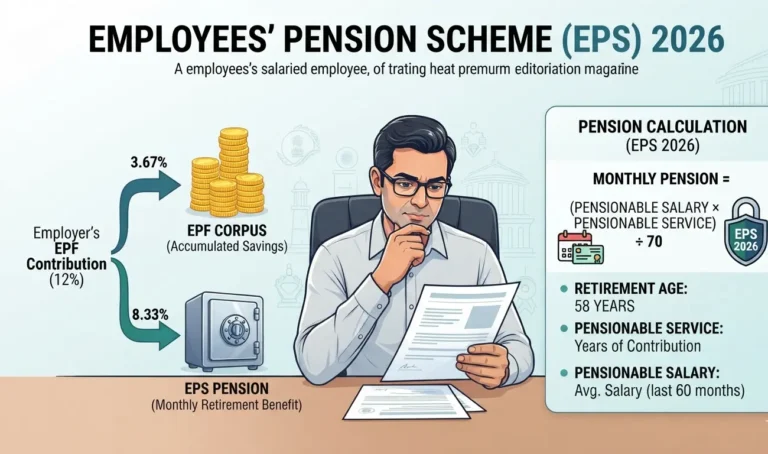
Where does 8.33% of your employer’s PF contribution actually go? Learn how the Employees’ Pension Scheme (EPS) works, how pension is calculated and who can claim it.

Planning for retirement? Explore Atal Pension Yojana (APY) eligibility, monthly contribution chart, pension benefits, tax provisions, withdrawal rules, and how APY compares with NPS.

Learn how to change your NPS fund manager, asset allocation (scheme preference), and nominee online through the CRA portal. This step-by-step 2026 guide explains eligibility, frequency limits, required documents, and common mistakes to avoid.