Income Tax Return Filing Checklist
Filing your income tax return becomes easier when your income details, tax documents, deductions, and filing information are ready before you begin.
Use this practical Income Tax Return Filing Checklist to organise the documents and information required for filing an accurate Income Tax Return in India under the Income-tax Act, 2025. The new Act applies from 1 April 2026 and uses the term tax year in place of the earlier previous-year terminology. This checklist is useful for salaried individuals, pensioners, freelancers, consultants, professionals, investors, landlords, and other taxpayers. The exact documents and disclosures may vary depending on your income sources, residential status, transactions, and applicable ITR form.
Start the ChecklistWhat should you check before filing your ITR?
Before filing your income tax return, verify your PAN and personal details, residential status, applicable tax year, correct ITR form, income from all sources, salary or pension records, Form 26AS, AIS, TIS, tax deductions, TDS and advance-tax credits, bank details, tax regime, and other applicable disclosures under the Income-tax Act, 2025.
Income Tax Return Filing Checklist
Review the following items before preparing and submitting your income tax return for the relevant tax year. Not every item will apply to every taxpayer. Use the checklist according to your income sources, residential status, investments, transactions, and the ITR form applicable to you.
Personal and Basic Details
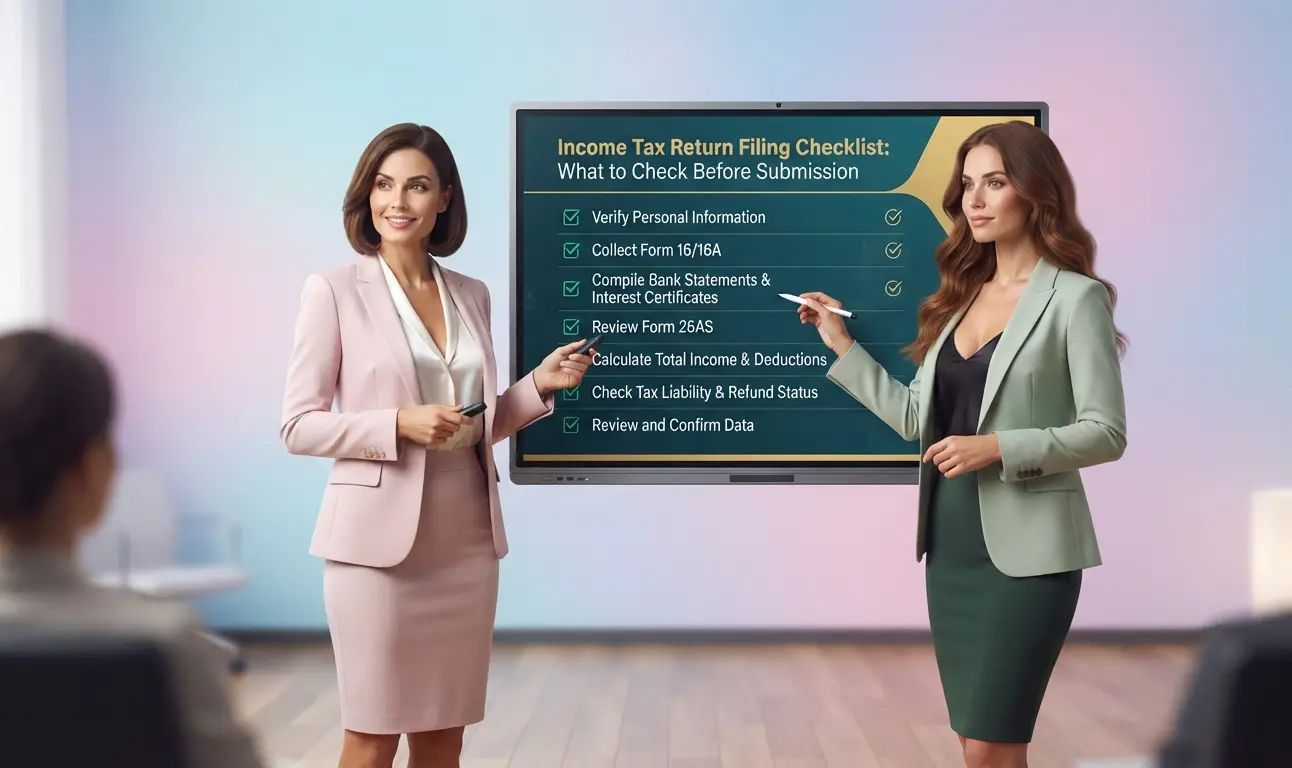
Keep your PAN, Aadhaar details, mobile number, email address, residential address, date of birth, residential status, and bank account information ready. Ensure that your name, date of birth, and other details match the records available with the Income Tax Department.
Correct Tax Year and ITR Form
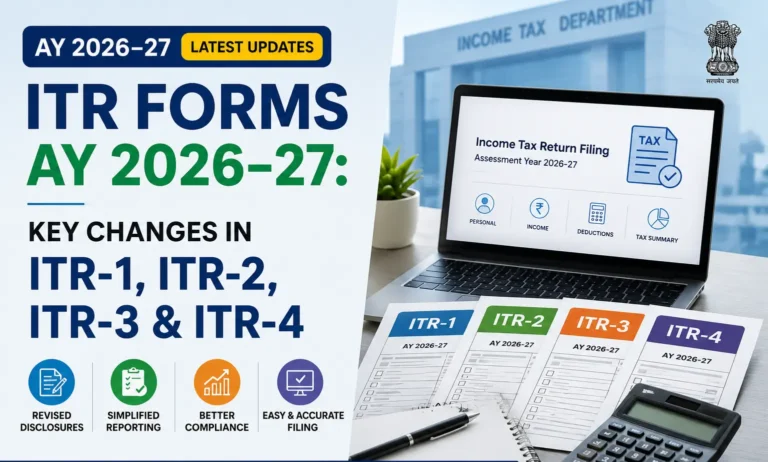
Confirm the relevant tax year and select the ITR form applicable to your income, investments, transactions, and other disclosures. Under the Income-tax Act, 2025, the term tax year replaces the earlier previous-year terminology. Also check whether any special reporting requirement applies to you.
Residential Status
Determine whether you are a resident, non-resident, or resident but not ordinarily resident, as applicable. Residential status may affect the scope of taxable income, foreign income reporting, foreign-asset disclosures, and other ITR requirements.
Income from Salary or Pension
Collect Form 16, salary slips, pension statements, details of allowances, perquisites, bonus, arrears, retirement benefits, and other employment-related income. Salary chargeability is covered under Section 15 of the Income-tax Act, 2025 (corresponding broadly to Section 15 of the Income-tax Act, 1961).
Non-Salary TDS and Form 16A
Obtain Form 16A and other TDS certificates where tax has been deducted on bank interest, commission, professional fees, rent, or other non-salary income. Reconcile the amounts with Form 26AS, AIS, TIS, and your own records.
Income from Other Sources
Review interest income, dividends, family pension, taxable gifts where applicable, winnings, and other taxable receipts. Check bank statements, interest certificates, dividend statements, and other relevant records. Income from other sources should be examined under the applicable provisions of the Income-tax Act, 2025.
House Property Income
Keep rental income details, rent receipts, rental agreements, municipal taxes paid, property ownership details, and housing-loan interest certificates ready where applicable. Computation of income from house property is covered under Sections 20 to 24 of the Income-tax Act, 2025, broadly corresponding to Sections 22 to 27 of the Income-tax Act, 1961.
Capital Gains and Securities Transactions
Collect contract notes, broker statements, mutual fund statements, purchase costs, sale consideration, holding-period details, capital-gain reports, and virtual-digital-asset transaction details where applicable. Review the applicable capital-gains provisions and the reporting requirements prescribed for the relevant tax year.
Business or Professional Income
Keep books of account, income and expense records, profit and loss details, balance sheet information, turnover records, GST-related records where relevant, presumptive-taxation details, and applicable tax-audit reports. Income under the head “Profits and gains of business or profession” is covered under Section 26 of the Income-tax Act, 2025.
Foreign Income and Assets
Where applicable, review foreign income, foreign bank accounts, foreign investments, overseas property, signing authority in foreign accounts, and foreign tax-credit details. Check the applicable ITR schedules and disclosure requirements carefully, particularly if you were resident in India during the relevant tax year.
Form 26AS, AIS and TIS
Download and review Form 26AS, the Annual Information Statement, and the Taxpayer Information Summary for reported income, TDS, TCS, tax payments, securities transactions, and other reported information. Reconcile these statements with your own books, bank records, investment statements, and income documents.
Deductions and Tax Benefits
Verify eligible deductions and tax benefits relating to investments, insurance, medical insurance, education-loan interest, donations, housing-loan interest, pension contributions, and other applicable claims. Eligibility may depend on the selected tax regime and the specific provisions applicable for the relevant tax year.
TDS, TCS and Advance Tax
Check TDS certificates, TCS details, advance-tax challans, self-assessment tax payments, and all tax deducted or paid during the relevant tax year. Ensure that the credits claimed in the return agree with Form 26AS and other available records.
Tax Regime Selection
Compare the applicable tax regimes and confirm the regime selected for the relevant tax year. The availability of deductions, exemptions, rebates, and the procedure for changing the tax regime may differ depending on the taxpayer’s income profile, ITR form, and whether business or professional income is involved.
Bank Account and Refund Details
Confirm that the bank account selected for refund is correctly reported and validated or prevalidated on the income-tax portal where required. Check the account number, IFSC, account holder name, and account status before submitting the return.
Previous Returns, Losses and Demands
Review the previous ITR, brought-forward losses, unabsorbed depreciation, previous disclosures, pending demands, refunds, notices, and other continuing information where applicable. Confirm that eligible losses have been correctly carried forward and reported.
Virtual Digital Assets and Special Transactions
If applicable, collect transaction statements and income details relating to virtual digital assets, shares, mutual funds, property, foreign investments, high-value transactions, or other reportable activities. Verify the relevant schedules and disclosures before filing.

Do not rely only on Form 16
Form 16 primarily covers salary income and related tax deductions. It may not contain every item of income or every tax-related transaction. Interest income, capital gains, rental income, dividends, securities transactions, virtual-digital-asset transactions, and other information may appear in Form 26AS, AIS, TIS, bank statements, broker statements, or other records.
Reconcile these records with your own documents before filing so that income, tax deducted, tax paid, and eligible claims are reported correctly. AIS and TIS information should be reviewed against your records and should not be treated as automatically error-free.
Do you need to attach documents with your ITR?
Income-tax returns are generally annexure-less. You normally do not need to upload or attach Form 16, investment proofs, bank statements, rent receipts, or other supporting documents with the return. However, you should retain these records safely because they may be required for verification, assessment, inquiry, appeal, or future reference.
Documents may need to be submitted separately if the Income Tax Department, assessing authority, or another competent authority specifically asks for them.
Additional Checks for Special Situations
- Foreign income, foreign assets, or foreign bank accounts
- Capital gains from shares, mutual funds, property, or other investments
- Virtual-digital-asset transactions
- Business or professional income
- Presumptive taxation or tax-audit requirements
- Brought-forward losses or unabsorbed depreciation
- Foreign tax credit and Form 67, where applicable
- Income from multiple employers
- Rental income or jointly owned property
- Director status, unlisted equity shares, or other special disclosures
- Agricultural income or exempt income requiring reporting
- Pending tax demands, refunds, notices, or previous filing corrections
- Income from partnership firms, LLPs, trusts, or other entities
- High-value transactions reflected in AIS or other information statements
- Tax treaty relief or foreign tax-credit claims, where applicable
Before You Submit Your Income Tax Return
- Confirm that the correct ITR form has been selected.
- Verify the relevant tax year and applicable filing details.
- Confirm your residential status and applicable disclosures.
- Reconcile income with Form 26AS, AIS, TIS, and supporting records.
- Check salary income, pension, interest, dividends, rent, capital gains, and other income.
- Verify TDS, TCS, advance tax, and self-assessment tax credits.
- Review deductions, exemptions, losses, and other eligible claims.
- Check foreign income, foreign assets, and other special disclosures where applicable.
- Confirm the selected tax regime and the resulting tax calculation.
- Check the final tax payable or refund amount.
- Verify bank account details and refund account selection.
- Check whether any notice, demand, previous return, or pending proceeding requires attention.
- Submit the return and complete e-verification, or submit ITR-V where applicable, within the prescribed time.
- Save the acknowledgement, computation, and supporting records for future reference.
Need a complete income tax return filing checklist?
Review the detailed guide for a more comprehensive list of documents, income details, tax records, deductions, special disclosures, and filing checks under the applicable tax law.
View the Complete ITR Filing Checklist
Income Tax Return Filing Checklist FAQs
What documents are required for filing an income tax return?
Common records include PAN, Aadhaar details, Form 16, Form 16A where applicable, payslips, bank statements, Form 26AS, AIS, TIS, investment proofs, TDS certificates, capital-gain statements, housing-loan interest certificates, rental records, and details of other income. The exact records depend on the taxpayer’s income sources, residential status, transactions, and applicable ITR form.
Does the Income-tax Act, 2025 use the term tax year?
Yes. The Income-tax Act, 2025 introduces the term tax year, which replaces the earlier terminology of previous year for the relevant period of income computation. Taxpayers should verify the applicable tax year and filing requirements while preparing their return.
Is Form 16 sufficient for filing an income tax return?
No. Form 16 primarily covers salary income and related tax deductions. Other income and tax information should also be checked through Form 26AS, AIS, TIS, bank statements, investment records, broker statements, and other relevant documents.
Should I check Form 26AS and AIS before filing my ITR?
Yes. Reviewing Form 26AS, AIS, and TIS helps identify reported income, TDS, TCS, tax payments, securities transactions, and other information that may need to be reconciled with your own records before filing the return.
Do I need to attach Form 16 or investment proofs with my ITR?
Income-tax returns are generally annexure-less, so Form 16, investment proofs, bank statements, and other supporting documents are normally not attached to the return. However, you should retain them safely because they may be required for verification, assessment, inquiry, appeal, or future reference.
What should I verify before submitting my income tax return?
Verify the ITR form, tax year, residential status, income details, deductions, tax credits, tax regime, tax payable or refund, bank account details, and required disclosures. After submission, complete e-verification or submit ITR-V within the prescribed time.
Official Income-tax Act, 2025 Sources
This checklist is prepared with reference to the Income-tax Act, 2025 and related information published by the Income Tax Department. For the latest provisions, forms, rules, notifications, and filing requirements, refer to the official sources below.
This checklist is provided for general educational and informational purposes. The documents, disclosures, deductions, exemptions, tax-regime options, and filing requirements may vary depending on the taxpayer’s income, residential status, transactions, applicable ITR form, and tax laws for the relevant tax year. The Income-tax Act, 2025 applies from 1 April 2026. Always verify the latest provisions, rules, forms, notifications, and filing requirements issued by the Income Tax Department before filing.