
Section 80C is now Section 123, and 80D is now Section 126. The limits have barely moved. What has changed is the question every salaried taxpayer must now answer first: are the deductions still worth claiming at all?
Old regime deductions are the reliefs a taxpayer gives up by staying in the new regime, and under the Income-tax Act, 2025 every one of them has moved to a new address. The familiar Chapter VI-A of the 1961 Act is now Chapter VIII. Section 80C has become Section 123, read with a new Schedule XV that lists the eligible investments. The additional ₹50,000 NPS deduction is Section 124(3), health insurance is Section 126, education-loan interest is Section 129, and savings and deposit interest for all age groups now sits in a single Section 153.
For most taxpayers, the amounts that can be claimed are unchanged. The more consequential change happened earlier, when the new regime became the default with lower slab rates and a rebate that makes income up to ₹12 lakh tax-free. This guide sets out each old regime deduction under its new section, the limits that apply, and, using actual computations, the level of deductions at which the old regime stops paying.
- Section 123 (old 80C, 80CCC, 80CCD(1)): ₹1,50,000 on the aggregate of the investments in Schedule XV.
- Section 124(3) (old 80CCD(1B)): a further ₹50,000 for your own NPS contribution.
- Section 126 (old 80D): ₹25,000 for self and family and ₹25,000 for parents; ₹50,000 each where a senior citizen is covered.
- Section 129 (old 80E): education-loan interest, without limit, for eight years.
- Section 153 (old 80TTA/80TTB): ₹10,000 on savings interest; ₹50,000 on deposit interest for senior citizens.
- Break-even: at a ₹15 lakh salary, reliefs must total about ₹5.44 lakh before the old regime matches the new.
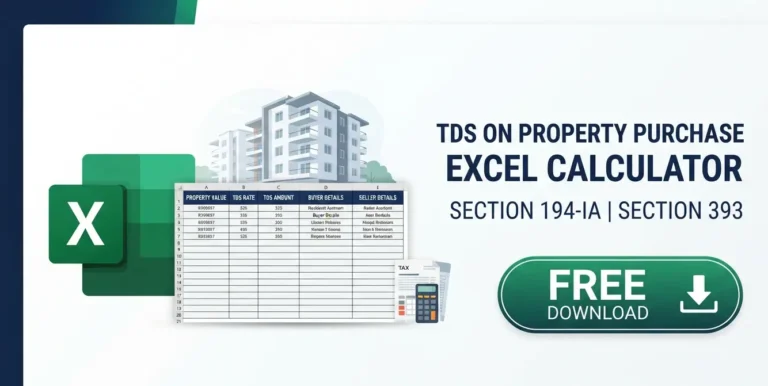
Check your own position before the investment season. Free Old Regime Deductions Planner (Excel) ↓

Old Regime Deductions Under the Income-tax Act, 2025: Old Section to New Section
In short, the 80C new section number is Section 123, and the 80D new section is Section 126. The table below maps the deductions most individuals claim. Sections 123 to 153 are verified against the official text published by the Income Tax Department; the remaining entries follow the Department’s section-wise comparison and our own Section Mapping tool.
| 1961 Act → 2025 Act | What it covers | Limit |
|---|---|---|
| 80C, 80CCC, 80CCD(1) Section 123 with Schedule XV | PF, PPF, ELSS, life insurance, tuition fees, home-loan principal, pension fund, own NPS contribution | ₹1,50,000 in aggregate |
| 80CCD(1B) Section 124(3) | Additional own NPS contribution | ₹50,000 |
| 80CCD(2) Section 124 | Employer’s NPS contribution | 10% of salary (14% for Government employers) |
| 80D Section 126 | Health insurance, preventive check-up, medical expenditure for uninsured seniors | ₹25,000 / ₹50,000 per group |
| 80DD / 80U Section 127 / Section 154 | Disabled dependant / taxpayer with disability | Fixed amounts by severity |
| 80DDB Section 128 | Treatment of specified diseases | As prescribed |
| 80E Section 129 | Interest on education loan | No cap; eight years |
| 80G / 80GG Section 133 / Section 134 | Donations / rent paid without HRA | As specified |
| 80TTA / 80TTB Section 153 | Interest on savings account / deposits (seniors) | ₹10,000 / ₹50,000 |
Some commentaries place the individual’s own NPS contribution (old 80CCD(1)) in Section 124. The official text of Schedule XV lists it at entry 1(y), within the ₹1.5 lakh limit of Section 123, and this guide follows the official text.
Section 123: The Old Regime Deductions Under the ₹1.5 Lakh Ceiling
Section 123 allows a deduction of up to ₹1,50,000 on the aggregate of the sums paid or deposited that are listed in Schedule XV. The single ceiling now covers everything that used to sit in Sections 80C, 80CCC and 80CCD(1). The principal eligible items are:
Savings and retirement
Employee PF and VPF, PPF, NSC, five-year tax-saver bank deposits, Senior Citizens’ Savings Scheme, Sukanya Samriddhi.
Market-linked and insurance
ELSS units, ULIPs, life insurance premium within the sum-assured limits, annuity and pension-fund contributions.
Family and home
Tuition fees for up to two children; principal repaid on a loan to buy or build a house, with stamp duty and registration.
Own NPS contribution
Entry 1(y): up to 10% of salary for employees, or 20% of gross total income for others, inside the same ₹1.5 lakh.
Two qualifications in Schedule XV are frequently overlooked. Life insurance premium counts only up to a percentage of the sum assured — 10% for most current policies, with 15% and 20% applying to specified older and special-case policies. And Schedule XV contains conditions under which a deduction already allowed is reversed, for example where an insurance policy or a house is given up within the minimum period.
A salaried taxpayer often reaches the ceiling without any additional investment, because employee PF alone may be close to ₹1.5 lakh. Before buying a tax-saving product in March, add up what has already been paid during the year.
Not sure how much of the ₹1.5 lakh is already used? The planner adds it up and shows the room left ↓
Section 124: NPS Deductions in the Old and New Regimes
Section 124 deals with contributions to the notified pension scheme. Two separate deductions matter to individuals:
- Additional own contribution, Section 124(3): up to ₹50,000, over and above the ₹1.5 lakh of Section 123. This is the old 80CCD(1B) and is available only in the old regime.
- Employer’s contribution: deductible up to 10% of salary (basic plus dearness allowance), or 14% where the employer is the Central or a State Government. Under the new regime the limit is 14% for all employers, and it is one of the few deductions the new regime retains.
The same contribution cannot be claimed twice. Section 124 denies a deduction for an amount already claimed under Section 123, so an own contribution must be allocated: first towards any unused room in the ₹1.5 lakh pool, and the balance, up to ₹50,000, under Section 124(3). The employer’s contribution is first included in salary and then deducted, so it must form part of the salary figure on which tax is computed.
Section 126: Health Insurance Deduction for Self, Family and Parents
Section 126 recognises two groups, each with its own limit: the taxpayer, spouse and dependent children; and the taxpayer’s parents.
| Group | Limit | Senior citizen covered | What counts |
|---|---|---|---|
| Self, spouse, dependent children | ₹25,000 | ₹50,000 | Premium (non-cash); preventive check-up up to ₹5,000 (cash allowed) |
| Parents | ₹25,000 | ₹50,000 | Premium (non-cash); preventive check-up within the same ₹5,000 |
Three rules govern the computation. First, the ₹5,000 for preventive health check-ups is not an addition; it falls within the group limits, and it is an aggregate figure across both groups. Second, under Section 126(7), medical expenditure on a senior citizen qualifies only where no premium is paid for that person’s health insurance. Third, premium, check-up and medical expenditure together are capped at ₹50,000 per group; the medical-expenditure route does not create a second limit on top of the insurance limit.
The highest figure a taxpayer can therefore claim under Section 126 is ₹1,00,000: ₹50,000 for a family that includes a senior citizen and ₹50,000 for senior-citizen parents.
Sections 129 and 153: Education-Loan Interest and Deposit Interest
Section 129 (old 80E)
An individual may deduct the interest paid on a loan from a bank, notified financial institution or approved charitable institution for the higher education of himself, his spouse, his children, or a student for whom he is the legal guardian. There is no monetary cap. The deduction runs for the tax year in which repayment of interest begins and the seven succeeding tax years, or until the interest is fully paid, whichever is earlier. Principal repayment is not deductible.
Section 153 (old 80TTA and 80TTB)
Section 153 combines both interest deductions. A taxpayer who is not a senior citizen may deduct up to ₹10,000 of interest on savings accounts with a bank, co-operative bank or post office; interest on fixed deposits does not qualify. A senior citizen may deduct up to ₹50,000 of interest on deposits of any kind, including time deposits, with those institutions. Interest from company deposits, debentures and bonds is outside Section 153 at any age.
What the New Regime Still Allows
The new regime under Section 202 is the default. A salaried taxpayer who stays in it receives the standard deduction of ₹75,000 (against ₹50,000 in the old regime) and the deduction for the employer’s NPS contribution up to 14% of salary. Sections 123, 124(3), 126, 129 and 153 are not available, nor is the exemption for house rent allowance or the deduction for interest on a self-occupied home loan.
In exchange, the slabs are lower and the rebate under Section 156 is larger: a resident individual with taxable income up to ₹12 lakh pays no tax, against ₹5 lakh under the old regime. Up to a salary of ₹12.75 lakh, that rebate means the new regime charges no tax at all; above it, the lower slab rates keep the new regime ahead unless old-regime reliefs are unusually large, as the break-even table below shows.
| Taxable income | Old regime rate | New regime rate |
|---|---|---|
| Up to ₹2.5 lakh | Nil | Nil |
| ₹2.5 lakh – ₹4 lakh | 5% | Nil |
| ₹4 lakh – ₹5 lakh | 5% | 5% |
| ₹5 lakh – ₹8 lakh | 20% | 5% |
| ₹8 lakh – ₹10 lakh | 20% | 10% |
| ₹10 lakh – ₹12 lakh | 30% | 10% |
| ₹12 lakh – ₹16 lakh | 30% | 15% |
| ₹16 lakh – ₹20 lakh | 30% | 20% |
| ₹20 lakh – ₹24 lakh | 30% | 25% |
| Above ₹24 lakh | 30% | 30% |
Old regime figures are for individuals below 60; the exemption limit is ₹3 lakh for resident senior citizens and ₹5 lakh for resident super senior citizens. Rebate: up to ₹12,500 where taxable income does not exceed ₹5 lakh (old) and up to ₹60,000 where it does not exceed ₹12 lakh (new). Health and education cess of 4% applies to both.
Compare both regimes on your own salary. Use the free planner, then confirm with our Old vs New calculator ↓
Worked Example: Old Regime Deductions on a ₹15 Lakh Salary
A salaried taxpayer below 60 has a taxable salary of ₹15,00,000 (basic plus DA ₹6,00,000) and savings-account interest of ₹12,000. The deductions are typical of a disciplined tax-planner: employee PF ₹60,000, PPF ₹50,000, ELSS ₹40,000 and life insurance premium ₹20,000; additional NPS ₹50,000; family health insurance ₹20,000; and ₹25,000 of health insurance for parents below 60.
| Item | Old regime | New regime |
|---|---|---|
| Salary less standard deduction, plus interest | ₹14,62,000 | ₹14,37,000 |
| Section 123 (₹1,70,000 paid, capped) | ₹1,50,000 | — |
| Section 124(3) — additional NPS | ₹50,000 | — |
| Section 126 — self and family / parents | ₹20,000 + ₹25,000 | — |
| Section 153 — savings interest (capped) | ₹10,000 | — |
| Taxable income | ₹12,07,000 | ₹14,37,000 |
| Tax including 4% cess | ₹1,81,580 | ₹99,370 |
The deductions of ₹2,55,000 reduce old-regime tax from ₹2,61,140 to ₹1,81,580, a saving of ₹79,560. Yet the new regime, with no deductions at all, costs ₹99,370 — ₹82,210 less. A taxpayer who invested in March purely to save tax would have been better off not investing for tax and switching regimes.
These are the default figures in our free Old Regime Deductions Planner, so the computation can be checked line by line in the workbook.

When Do Old Regime Deductions Stop Paying?
The old regime vs new regime question is not whether a deduction saves tax — it always does in the old regime — but whether all of a taxpayer’s old-regime reliefs together beat the lower rates of the new regime. The table shows, for a salaried resident below 60, the total reliefs needed (beyond the standard deduction) for old-regime tax to fall to the new-regime figure. “Reliefs” here means Chapter VIII deductions plus HRA exemption and interest on a self-occupied home loan, because all three disappear in the new regime.
| Salary | New regime tax | Old regime tax, no reliefs | Reliefs needed to break even |
|---|---|---|---|
| ₹8,00,000 | Nil | ₹65,000 | ₹2,50,000 |
| ₹10,00,000 | Nil | ₹1,06,600 | ₹4,50,000 |
| ₹12,75,000 | Nil | ₹1,87,200 | ₹7,25,000 |
| ₹15,00,000 | ₹97,500 | ₹2,57,400 | ₹5,44,000 |
| ₹18,00,000 | ₹1,50,800 | ₹3,51,000 | ₹6,42,000 |
| ₹20,00,000 | ₹1,92,400 | ₹4,13,400 | ₹7,09,000 |
| ₹25,00,000 and above | ₹3,19,800 at ₹25 lakh | ₹5,69,400 at ₹25 lakh | About ₹8,00,000 |
Now compare that with what Chapter VIII can deliver. A taxpayer below 60 who uses every deduction in this guide in full — ₹1,50,000 under Section 123, ₹50,000 under Section 124(3), ₹75,000 under Section 126 with senior-citizen parents, and ₹10,000 under Section 153 — reaches ₹2,85,000. Even adding ₹2,00,000 of home-loan interest, the total of ₹4,85,000 falls short of the break-even at every salary above about ₹10.5 lakh. The old regime generally remains the better choice only where a large HRA exemption, home-loan interest and full use of Chapter VIII come together.
Before committing money to any tax-saving investment this year, compute the tax under both regimes. If the new regime is cheaper even after counting every deduction, the investment should be judged on its merits as an investment, not as a tax saving.
Find your own break-even point. Free Old Regime Deductions Planner ↓
Year-End Checklist and Common Errors in Claiming Old Regime Deductions
Employers usually call for investment proofs between December and February, and a deduction counts only if the payment is made within the tax year, that is, by 31 March. The following errors account for most rejected or reduced claims:
- Counting the same NPS contribution twice, under Section 123 and Section 124(3).
- Investing beyond ₹1.5 lakh without noticing that employee PF had already used most of the limit.
- Paying health insurance premium in cash. Only the preventive check-up may be paid in cash.
- Treating the ₹5,000 check-up as an extra deduction rather than part of the group limit.
- Claiming fixed-deposit interest under Section 153 below the age of 60, or company-deposit interest at any age.
- Claiming education-loan principal, or claiming interest beyond the eight-year window.
- Missing the bank’s interest-and-principal certificate for a home loan, which is the evidence for both Section 123 and the interest deduction.
What the Tribunals Have Held
Disputes over these deductions are rarely about the law; they turn on evidence and procedure. The following rulings, decided under the 1961 Act, remain relevant because the corresponding provisions are substantially unchanged.
| Case | Issue | Held |
|---|---|---|
| Goetze (India) Ltd. v. CIT (Supreme Court, 2006), (2006) 284 ITR 323 | Deduction not claimed in the return, raised by letter during assessment | The Assessing Officer cannot allow a new claim except through a revised return; the power of appellate authorities to admit a fresh claim is not curtailed. |
| Abhishek Rajeshbhai Karia v. ITO (ITAT Ahmedabad, 2026), ITA No. 2327/Ahd/2025, AY 2019-20, order dated 15 May 2026 | Section 80D (now Section 126): medical expenditure on parents | Disallowance deleted; medical expenditure incurred for the assessee’s parents held allowable on the facts. The connected 80DDB claim was remitted for verification of documents. Note: medical expenditure qualifies only for a senior citizen without health insurance, now Section 126(7). |
| Opender Gupta v. ACIT (ITAT Delhi, 2021), ITA No. 7278/Del/2019, AY 2014-15, order dated 15 September 2021 | Section 80C (now Section 123): home-loan principal | Deduction of ₹1,60,492 on principal allowed on the strength of the bank’s certificate showing the principal repaid. |
Free Old Regime Deductions Planner (Excel)
Our free Excel planner applies every limit discussed in this guide — the ₹1.5 lakh pool of Section 123, the NPS limits of Section 124, the ₹50,000 group caps of Section 126, Sections 129 and 153 — and compares old-regime tax, with and without deductions, against the new regime. It also shows the room left under each section and the indicative tax that filling it would save.
Old Regime Deductions Planner — Tax Year 2026-27
Sections 123, 124, 126, 129 and 153 · old vs new regime · unused headroom · no macros.
Old vs New Tax Regime Calculator
A quick online comparison of the two regimes on your income.
Old Regime Deductions: Frequently Asked Questions
What are old regime deductions called under the Income-tax Act, 2025?
The Chapter VI-A deductions of the 1961 Act now sit in Chapter VIII of the Income-tax Act, 2025. Section 80C becomes Section 123 read with Schedule XV, the additional NPS deduction under 80CCD(1B) becomes Section 124(3), 80D becomes Section 126, 80E becomes Section 129, and 80TTA and 80TTB are combined in Section 153. The limits are substantially unchanged, and the deductions remain available only to taxpayers who opt out of the new regime.
Is the ₹1.5 lakh limit under Section 123 the same as the old Section 80C limit?
Yes. Section 123 allows up to ₹1,50,000 on the aggregate of the sums listed in Schedule XV. The Schedule brings together what used to be Sections 80C, 80CCC and 80CCD(1), so life insurance premium, PF, PPF, ELSS, tuition fees, home-loan principal, pension-fund contributions and an individual’s own NPS contribution all share this single ₹1.5 lakh ceiling.
Can I claim my NPS contribution under both Section 123 and Section 124(3)?
Not for the same rupee. An individual’s own NPS contribution can be counted within the ₹1.5 lakh limit of Section 123, and a further ₹50,000 is available under Section 124(3), but Section 124 bars a deduction for an amount already claimed under Section 123. In practice, a taxpayer who contributes ₹2 lakh to NPS and has no other Section 123 investments can claim ₹1.5 lakh under Section 123 and ₹50,000 under Section 124(3).
How much health insurance deduction can I claim for my parents under Section 126?
Up to ₹25,000 a year for premium paid on your parents’ health insurance, rising to ₹50,000 if either parent is a senior citizen. A preventive health check-up of up to ₹5,000 is included within these limits and may be paid in cash; premium must be paid by a non-cash mode. If a senior-citizen parent has no health insurance, medical expenditure on that parent qualifies instead, within the same ₹50,000 combined cap.
Are any of these deductions available under the new regime?
Only a few. Under the new regime, a salaried taxpayer gets the standard deduction of ₹75,000 and the deduction for the employer’s NPS contribution of up to 14% of salary. Sections 123, 124(3), 126, 129 and 153 are not available, and neither are HRA exemption or interest on a self-occupied home loan.
How much must I deduct for the old regime to be worth it?
More than most people expect. For a salaried taxpayer, total old-regime reliefs — Chapter VIII deductions, HRA exemption and home-loan interest together — must reach about ₹5.44 lakh at a salary of ₹15 lakh and about ₹7.09 lakh at ₹20 lakh before the old regime merely matches the new one. At ₹25 lakh and above the figure is about ₹8 lakh. Chapter VIII deductions alone rarely exceed ₹2.85 lakh, so the old regime usually pays only with a large HRA exemption or home-loan interest as well.
I forgot to claim a deduction in my return. Can I still claim it?
Yes, if the time for revising the return has not expired: file a revised return with the claim. A deduction cannot be added merely by writing to the Assessing Officer during assessment, as the Supreme Court held in Goetze (India) Ltd. v. CIT (2006), but the same judgment confirms that appellate authorities retain the power to admit a fresh claim. Keep the investment proof in either case.
Do I need to submit investment proofs to my employer?
Your employer can consider a deduction while computing TDS on salary only if you declare it and support it with evidence, usually requested between December and February. If you miss the employer’s deadline, more tax will be deducted, but the deduction is not lost: you can still claim it in your return, provided the payment was actually made within the tax year.
Plan the year’s investments with the numbers in front of you. Download the free deductions planner ↓
Deductions, regimes and salary tax
Old Regime Deductions Planner Excel
Sections 123 to 153, both regimes, and the room left under each limit.
CalculatorOld vs New Tax Regime Calculator
Compare the two regimes on your income in a minute.
80C Is Now Section 123: Full Schedule XV List
Every eligible investment and the conditions attached to it.
Health Insurance Deduction Under Section 126
Self, parents and senior citizens, with worked limits.
NPS ₹50,000 Deduction Under Section 124(3): Still Worth It?
The extra NPS deduction against the new regime.
Investment Proof Submission: Old Regime Checklist
What your employer will ask for, and by when.
HRA Exemption Calculator
Work out the exempt and taxable parts of your HRA.
Free TemplateTDS on Salary Calculator Excel
Monthly TDS on salary under Section 392.

The Income-tax Act, 2025 has renumbered old regime deductions without materially changing them: ₹1.5 lakh under Section 123, ₹50,000 under Section 124(3), up to ₹1 lakh under Section 126, and the interest deductions of Sections 129 and 153. What has changed is their value. With the new regime’s lower slabs and ₹12 lakh rebate, Chapter VIII deductions on their own rarely outweigh the new regime above a ₹10 lakh income. The old regime remains worthwhile mainly where HRA exemption and home-loan interest are substantial. Every taxpayer should compute both before the investment season, not after it.
Sources & References
- Section 123 — Income-tax Act, 2025Income Tax Department. ₹1,50,000 on the aggregate of the sums in Schedule XV.
- Schedule XV — Income-tax Act, 2025Eligible investments, including pension-scheme contributions at entry 1(y); insurance premium limits.
- Section 124 — Income-tax Act, 2025Employer and own NPS contributions; ₹50,000 under sub-section (3); no double deduction.
- Section 126 — Income-tax Act, 2025Health insurance, preventive check-up, medical expenditure for senior citizens, combined caps.
- Section 129 — Income-tax Act, 2025Interest on loan for higher education.
- Section 153 — Income-tax Act, 2025Interest on deposits: ₹10,000 / ₹50,000.
- Section 156 — Income-tax Act, 2025Rebate for resident individuals: ₹12,500 (old) and ₹60,000 (new).
- Goetze (India) Ltd. v. CIT, (2006) 284 ITR 323 (SC)Fresh claim of deduction outside the return.
- Income Tax Law Mapping: Old Act vs New Acttaxbizmantra.com. Section-wise comparison of the 1961 and 2025 Acts.
Disclaimer: This article is for general information and education only and is not tax or investment advice. It reflects the Income-tax Act, 2025 as amended by the Finance Act, 2026 for Tax Year 2026-27, as we read it in November 2026. Break-even figures assume a resident salaried individual below 60 with no other income and are rounded; actual results depend on individual facts. Verify against the Act and consult a Chartered Accountant before making investment or regime decisions.