

Income Tax Late Filing Fee Calculator Excel Template
Filing your income tax return after the due date? Calculate the applicable late-filing fee quickly and understand the filing deadline before submitting your return.
The Income Tax Late Filing Fee Calculator Excel Template helps individuals and professionals estimate the standard late-filing fee based on total income, the applicable statutory due date, and the actual filing date. It also highlights the distinction between the basic exemption limit and the income threshold used for determining the late-filing fee. Use the calculator to review the applicable fee, understand the belated-return window, and plan your income tax return filing more confidently.
Download the Free Excel TemplateIncome Tax Late Filing Fee: Quick Answer
Under the standard late-filing fee provisions, the fee for filing an income tax return after the applicable due date is generally:
- ₹1,000 where total income does not exceed ₹5,00,000.
- ₹5,000 where total income exceeds ₹5,00,000.
The ₹5 lakh threshold is used for determining the standard late-filing fee. It should not be confused with the taxpayer’s basic exemption limit, which is relevant to the filing-obligation analysis.
The applicable fee may depend on whether the return is filed within the permitted belated-return period and whether any separate mandatory filing condition applies.
What Is the Income Tax Late Filing Fee?
The income tax late-filing fee is a statutory fee that may become payable when an income tax return is filed after the applicable due date. It is commonly referred to as the belated-return fee.
The fee is separate from the income tax payable on the taxpayer’s total income. A taxpayer may have no additional income tax payable and still need to consider whether a late-filing fee applies.
Important distinction: The late-filing fee is determined using the prescribed income threshold and filing conditions. It should not be treated as automatically identical to the basic exemption limit under the applicable tax regime.
The standard fee provisions are contained in the Income-tax Act, 2025 . For the relevant statutory provision, refer to Section 428 of the Income-tax Act, 2025 .
Income Tax Late Filing Fee Calculation
The standard late-filing fee is generally determined by comparing the taxpayer’s total income with the prescribed ₹5 lakh threshold. The following table summarises the two standard fee slabs.
| Total Income | Standard Late-Filing Fee |
|---|---|
| Does not exceed ₹5,00,000 | ₹1,000 |
| Exceeds ₹5,00,000 | ₹5,000 |
₹1,000 Fee — Total Income Up to ₹5 Lakh
Where the taxpayer’s total income does not exceed ₹5,00,000, the standard late-filing fee is generally ₹1,000, subject to the applicable filing conditions and statutory provisions.
₹5,000 Fee — Total Income Above ₹5 Lakh
Where the taxpayer’s total income exceeds ₹5,00,000, the standard late-filing fee is generally ₹5,000, subject to the applicable filing conditions and statutory provisions.
Does the Basic Exemption Limit Affect the Fee?
The basic exemption limit and the late-filing fee threshold serve different purposes. The basic exemption limit is relevant to determining taxability and, in certain cases, the obligation to furnish a return. The late-filing fee uses the prescribed income threshold for determining the applicable fee slab.
When May No Fee Apply?
A late-filing fee may not apply where the return is filed within the applicable due date or where a specific statutory exemption or non-applicability condition applies. The exact result depends on the taxpayer’s circumstances and the relevant provisions.
Belated Return Filing Deadline
A belated return is an income tax return filed after the original statutory due date but within the period permitted under the applicable law.
For the standard example used in this calculator, the belated return deadline is generally calculated as 31 December of the relevant filing year. However, the actual deadline may depend on the applicable statutory provision and whether assessment has been completed earlier.
Example: If the original due date is 31 July 2027, the standard belated-return deadline used in the calculator is 31 December 2027.
The statutory due date may differ depending on the taxpayer’s category, audit requirements, and other applicable conditions. Therefore, always enter the due date applicable to the taxpayer rather than relying only on the default illustrative date.

How to Use the Income Tax Late Filing Fee Excel Template
Follow the steps below to calculate the indicative late-filing fee using the Excel template.
Enter Taxpayer Details
Select the applicable tax regime and age category, where required by the template.
Enter Total Income
Enter the taxpayer’s total income used for determining the applicable standard late-filing fee slab.
Enter the Statutory Due Date
Enter the applicable original due date of the income tax return. The default date is illustrative.
Enter the Actual Filing Date
Enter the date on which the return is actually filed or is proposed to be filed.
Review the Late-Filing Fee
The calculator compares the dates and total income to display the applicable standard fee result.
Check the Important Notes
Review the assumptions, filing-obligation notes, and limitations before relying on the result.
Income Tax Late Filing Fee Calculation Example
Consider an individual taxpayer with the following details:
| Particulars | Illustrative Details |
|---|---|
| Taxpayer Category | Individual |
| Total Income | ₹7,50,000 |
| Original Due Date | 31 July 2027 |
| Actual Filing Date | 15 September 2027 |
| Filing Status | Belated Return |
Since the illustrative total income exceeds ₹5,00,000 and the return is filed after the original due date within the applicable belated-return period, the standard late-filing fee is ₹5,000.
This example is for understanding the calculation method. The actual fee may depend on the taxpayer’s filing obligation, applicable statutory provisions, and the dates relevant to the return.
Important Limitations and Assumptions
The Income Tax Late Filing Fee Calculator Excel Template is designed as a practical calculation aid. It should be used with the following assumptions in mind:
- The calculator estimates the standard late-filing fee based on the information entered by the user.
- The ₹5 lakh threshold is distinct from the basic exemption limit under the applicable tax regime.
- Certain taxpayers may have mandatory filing obligations regardless of income.
- The statutory due date may differ depending on the taxpayer’s category and applicable filing requirements.
- The calculator does not determine every possible filing obligation or statutory exception.
- The calculator does not calculate interest under Section 234A or other interest provisions.
- An Updated Return (ITR-U) is a separate filing route with its own eligibility conditions, restrictions, and additional-tax consequences.

Download Free Income Tax Late Filing Fee Calculator Excel Template
Calculate the standard late-filing fee quickly, understand the belated-return deadline, and review the result in a structured Excel workbook.
This free Income Tax Late Filing Fee Calculator Excel Template is designed for individuals, tax professionals, finance teams, and students who want a simple and practical way to estimate the applicable late-filing fee.
- Calculates the standard ₹1,000 / ₹5,000 late-filing fee slabs
- Considers total income and filing dates
- Displays the indicative belated-return deadline
- Includes taxpayer regime and age-related inputs
- Provides a clear filing-status output
- Includes important assumptions and usage guidance
File format: Microsoft Excel (.xlsx) · Free download · For educational and calculation purposes
Related Tax and Finance Tools
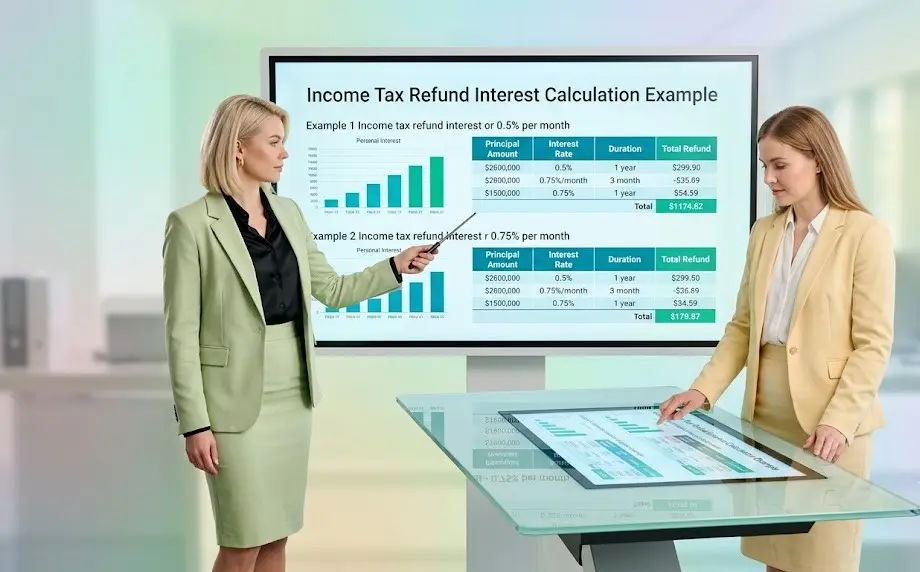
Income Tax Refund Interest Calculator
Estimate interest on income tax refunds using a practical calculation approach.
Read More
Income Tax Act 2025 Section Mapping
Find corresponding sections between the earlier and new income tax law framework.
Explore Tool
Income Tax Return Filing Checklist
Review important documents and filing considerations before submitting your income tax return.
View Checklist
Income Tax Interest Calculator
Understand and estimate applicable income tax interest using a structured calculation tool.
Calculate NowFrequently Asked Questions
What is the late filing fee for an income tax return?
The standard late-filing fee is generally ₹1,000 where total income does not exceed ₹5,00,000 and ₹5,000 where total income exceeds ₹5,00,000, subject to the applicable statutory provisions and filing conditions.
Is the late filing fee ₹1,000 or ₹5,000?
Both slabs may apply. The applicable standard fee depends on whether total income is within or above the prescribed ₹5 lakh threshold.
Is late filing fee applicable below the basic exemption limit?
The basic exemption limit and the late-filing fee threshold are different concepts. Income below the basic exemption limit does not automatically establish that no return is required or that no fee can apply. Other mandatory filing conditions may need to be examined.
What is the last date for filing a belated return?
The belated-return deadline depends on the applicable statutory provisions. For the standard example used in this calculator, the deadline is generally 31 December of the relevant filing year, subject to earlier completion of assessment and other applicable conditions.
Can I file an updated return after the belated-return deadline?
An Updated Return (ITR-U) may be available subject to statutory eligibility conditions. It has separate restrictions and additional-tax consequences and is not simply a replacement for every late return.
Does this calculator calculate interest under Section 234A?
No. This template is designed to estimate the standard late-filing fee. It does not calculate interest under Section 234A or other income tax interest provisions.
Can I use this Excel template for different taxpayers?
Yes, the template can be used as a practical calculation aid for different taxpayers by entering the relevant income, filing dates, and other applicable inputs. However, taxpayer-specific filing obligations should be verified separately.
Is the late-filing fee refundable?
The treatment of any payment depends on the applicable statutory provisions and the taxpayer’s circumstances. This calculator does not determine refund eligibility or adjustment of late-filing fee payments.
Calculate Your Late-Filing Fee with Confidence
The Income Tax Late Filing Fee Calculator Excel Template provides a simple way to estimate the standard late-filing fee, review the belated-return deadline, and understand the key assumptions behind the calculation.
Use the template as a practical starting point, and verify the applicable filing obligation and statutory provisions before submitting your income tax return.
Download the Free Excel TemplateSources and References
Disclaimer: This Income Tax Late Filing Fee Calculator Excel Template is provided for educational, informational, and general calculation purposes only. The results are indicative estimates based on the information entered by the user and the assumptions incorporated in the template.
The template does not constitute tax, legal, accounting, or professional advice. Tax laws, filing deadlines, fee provisions, exemptions, and other statutory requirements may change. Taxpayer-specific filing obligations, applicable due dates, mandatory filing conditions, and eligibility for any filing route should be independently verified from the applicable law and official Income Tax Department guidance.
TaxBizMantra does not guarantee the completeness, accuracy, or applicability of the calculated result in every situation. Users should exercise professional judgment and consult a qualified tax professional where necessary.